
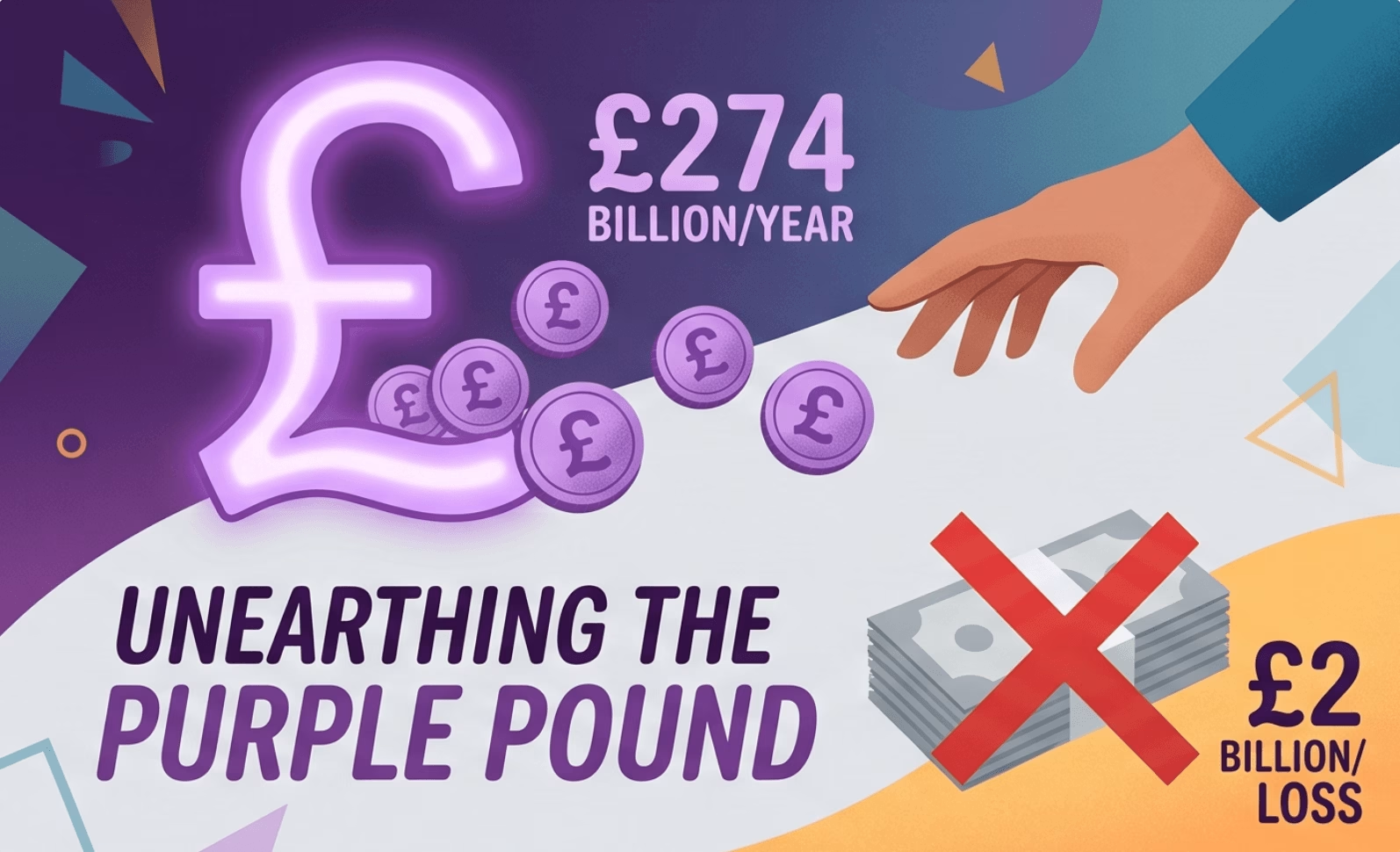
Revenue blindspot: If your digital products, services, or physical spaces are not accessible, you may be excluding a high-value customer segment and losing revenue to more inclusive competitors.
Most businesses investigate lost revenue through pricing, marketing efficiency, conversion funnels, or basket abandonment. Far fewer examine a quieter but highly material cause: accessibility barriers.
When businesses audit their lost revenue, they look at cart abandonment, pricing strategies, or marketing spend. But they rarely look at accessibility. The Purple Pound refers to the spending power of disabled people and their households. In the UK alone, this market is widely estimated at £274 billion annually. Globally, the disabled market is often cited at around $13 trillion when accounting for disabled consumers, their families, and aligned spending decisions. Yet, businesses lose an estimated £2 billion every single month simply by ignoring accessible design.
The commercial message is simple: inaccessible experiences do not just create frustration. They create drop-off, defection, and lost lifetime value.
Bottom line: Inclusive design is not only a legal or ethical responsibility. It is a practical growth lever that can improve conversion, retention, reputation, and share of wallet.
If your website, app, or physical store isn’t accessible, you aren’t just frustrating users—you are actively leaving money on the table. Here is where businesses are leaking revenue right now:
Why accessibility is a commercial issue
Accessibility is often treated as a compliance work-stream or a late-stage design review. That framing is too narrow. In reality, accessibility affects every stage of the customer journey:
-
Discovery: Can users find and understand your offer?
-
Consideration: Can they compare products, read details, and trust the experience?
-
Conversion: Can they complete checkout, booking, sign-up, or enquiry without assistance?
-
Service: Can they get support through accessible channels?
-
Loyalty: Will they return, recommend you, and bring others with them?
When a business fails at any of these steps, the customer rarely submits a formal complaint. More often, they leave and spend elsewhere.
Accessibility failures are often invisible on dashboards because they appear as ordinary bounce rate, drop-off, or lost conversion rather than as clearly labeled accessibility issues.
Where businesses leak revenue
1. The digital doorway is locked
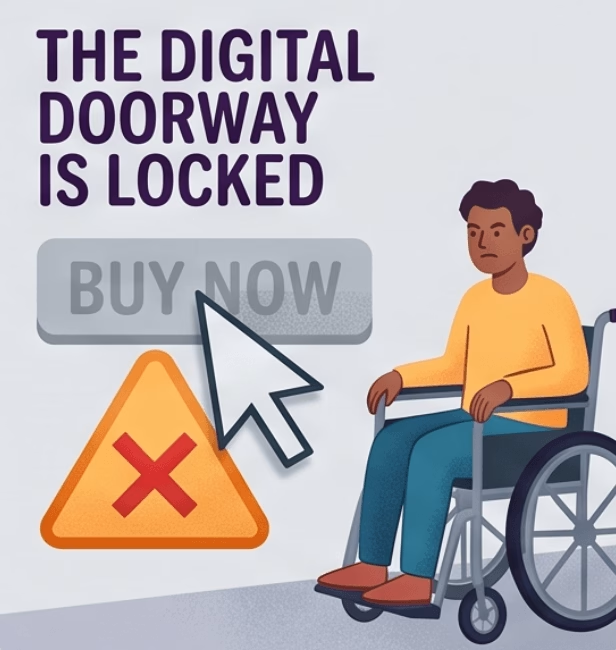
The reality: 73% of potential disabled customers encounter severe accessibility barriers on more than a quarter of the websites they visit.
Many disabled customers encounter major barriers online, from unreadable interfaces to forms that cannot be completed using assistive technology. If a screen reader cannot interpret a checkout page, or if a user cannot navigate by keyboard alone, the transaction ends there.
The cost: If a screen reader can’t navigate your checkout page, or if a user can’t buy using keyboard-only navigation, they don’t call customer support. They close the tab. Every inaccessible page can act like a locked front door for a customer who was otherwise ready to buy.
Commercial impact: Typical failure points include:
-
Poor colour contrast and unreadable text
-
Missing image alt text or unclear labels
-
Broken keyboard navigation
-
Inaccessible modals, calendars, and dropdowns
-
Confusing error messages in forms and checkout
-
Video content without captions or transcripts
The growth opportunity: Move beyond standard compliance checklists. Run real user testing with disabled individuals to ensure your digital experience is actually frictionless.
2. The power of “basket abandonment” network effect
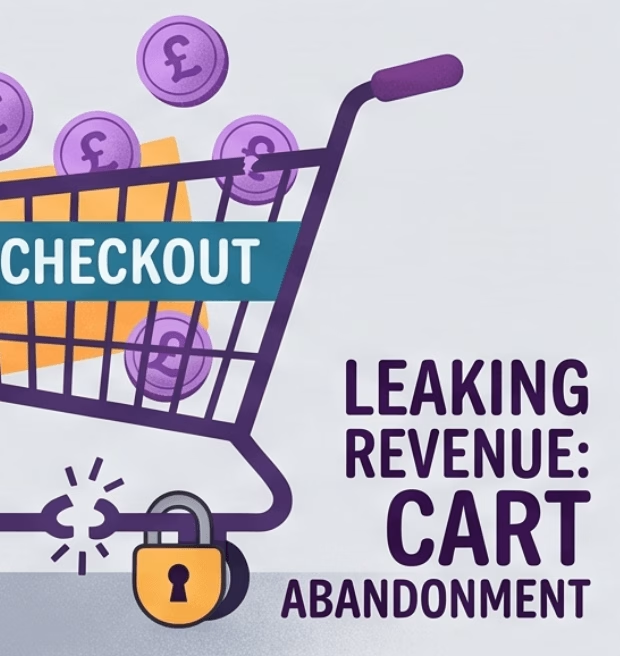
The reality: 75% of disabled people and their families have actively walked away from a business due to poor accessibility or bad customer service.
Accessibility problems rarely affect one individual in isolation. Disabled people often shop, travel, dine, and bank as part of households, families, friendship groups, and care networks. If one person is excluded, the entire group may redirect its spending.
The cost: Disabled consumers don’t shop in a vacuum. If a venue or website fails one family member, the entire group redirects their spending to a competitor who gets it right.
This means the cost of poor accessibility is not just one lost sale. It can include:
-
The disabled customer’s immediate transaction
-
Companion or household spending
-
Repeat purchases and renewals
-
Word-of-mouth recommendations
-
Brand trust across wider communities
The growth opportunity: Train your customer-facing teams on disability confidence and ensure inclusive design is baked into your product roadmap from day one. Businesses that remove friction for disabled customers often create a better experience for everyone, including older users, mobile users, and time-pressured customers.
3. High street and hospitality losses start online
For physical businesses, digital accessibility still matters. Customers increasingly check accessibility details online before deciding where to go. If a restaurant, shop, venue, clinic, or bank branch does not clearly explain access arrangements, many people will not risk the visit.
The Reality: Broken digital experiences translate directly to lost physical revenue. Millions of pounds are lost annually in sectors like high street retail, supermarkets, and banking due to poor inclusive layouts or unnavigable booking systems.
Common issues include:
-
No clear accessibility information on websites
-
Booking systems that are difficult to use
-
Maps, menus, or forms that are not screen-reader friendly
-
Lack of information about step-free access, toilets, seating, lighting, or quiet spaces
In these cases, lost physical footfall often begins with a failed digital interaction.
The Cost: If an individual can’t easily check a restaurant’s physical accessibility online, or if the booking portal fails them, they choose somewhere else.
The Fix: Provide clear, upfront accessibility data on your digital platforms and make simple, reasonable physical adjustments (like quiet hours or ramp access).
Inclusive design isn’t a “nice-to-have” corporate social responsibility project. It is a critical revenue driver. Making your business accessible isn’t just the right thing to do legally and ethically—it makes immense commercial sense.
Practical fixes that unlock value
1. Audit real journeys, not just pages
Focus on the moments tied to revenue: product discovery, booking, checkout, account creation, payment, and support. A page can appear technically compliant while the full journey still fails in practice.
2. Test with disabled users
Automated tools are useful, but they do not replicate lived experience. Include people who use screen readers, keyboard-only navigation, magnification, captions, voice input, and cognitive accessibility strategies.
3. Train frontline teams
Accessibility is not only a design problem. Customer support, sales, operations, and in-store teams all shape the experience. A well-designed service can still fail if staff are unprepared or inconsistent.
4. Publish clear accessibility information
Make it easy for customers to understand what to expect. This is especially important for venues, hospitality, retail, healthcare, and transport-related services.
5. Build inclusion into the roadmap
Retrofitting accessibility is slower and more expensive than designing for it from the start. Add accessibility criteria to briefs, design reviews, development acceptance criteria, and release testing.
Why this matters beyond compliance
Accessible design can produce benefits well beyond the disabled customer segment. It often improves:
-
Conversion rates: clearer flows, fewer errors, less friction
-
SEO and discoverability: better structure and content clarity
-
Usability for all users: especially on mobile and low-attention journeys
-
Brand perception: stronger trust and inclusivity signals
-
Operational efficiency: fewer support contacts caused by avoidable friction
Best practice:
Executive summary for leadership teams
-
The Purple Pound represents a major and often underserved market.
-
Accessibility barriers can directly reduce conversion, footfall, retention, and referral value.
-
Revenue loss happens across digital products, customer service, and physical environments.
-
Compliance alone is not enough; real-world usability matters.
-
Organisations that invest in inclusive design can unlock growth while reducing friction for all customers.
Questions to ask your business now
-
Can a customer complete our most important journey using keyboard-only navigation?
-
Have disabled users tested our checkout, booking, or onboarding flow?
-
Do we clearly publish accessibility information for our products, services, or locations?
-
Are our customer-facing teams trained to support disabled customers confidently and consistently?
-
Is accessibility included in design, delivery, QA, and roadmap decisions?
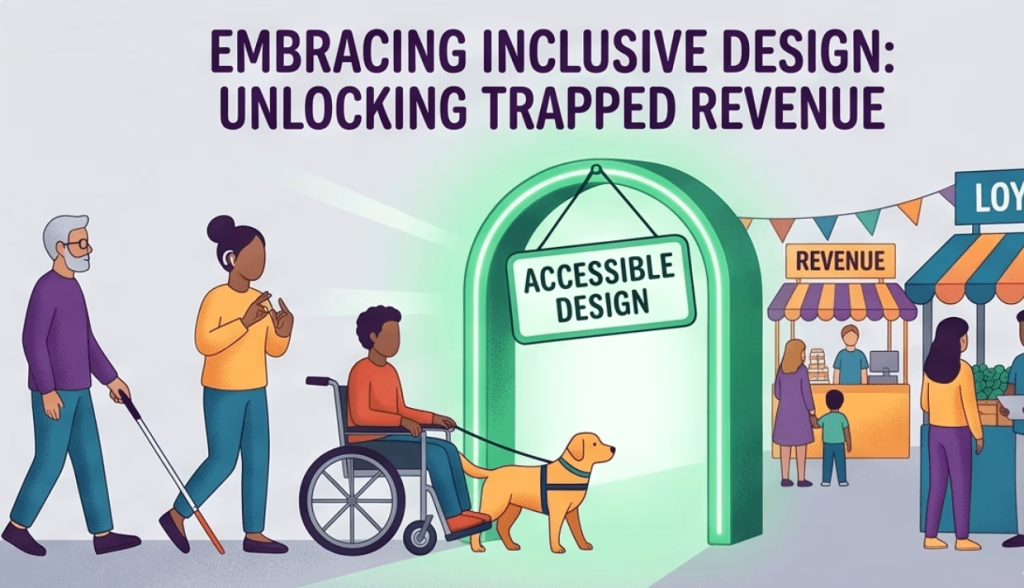
If your website, app, software, or service experience is quietly excluding disabled customers, you may be shutting out a valuable segment of your market without realising it.
A comprehensive UX and accessibility audit can help identify hidden friction, reveal lost-revenue points, and prioritise improvements that expand your customer base.
#PurplePound #InclusiveDesign #RevenueGrowth #Accessibility #UXDesign #BusinessGrowth #DiversityAndInclusion
Sources:
UK Parliament


