
Image credit: Visual created in collaboration with Gemini AI
The targeted support opportunity has a hidden operational cost
On April 6th 2026, the FCA’s targeted support regime goes live. For the first time, regulated firms will be able to offer personalised suggestions to groups of consumers with shared characteristics — without requiring a full advice process for each individual.
The numbers behind this shift are significant. Only 9% of UK adults received regulated financial advice in the last 12 months. An estimated 18 million consumers currently fall into the advice gap — people who would benefit from professional guidance but don’t meet the commercial threshold for a full advice relationship. Targeted support is the FCA’s most ambitious attempt to close that gap, and the industry is right to be optimistic about the new revenue streams and social impact it could unlock.
But there is a conversation the industry is not having. And it matters more than the application process.
The operational readiness gap
Targeted support is not a compliance-free zone. The FCA has been explicit: firms offering targeted support must still demonstrate appropriate recommendations to defined consumer segments. Evidence trails, audit-ready processes, and outcome monitoring all apply. This is Consumer Duty extended to a new service line, not a relaxation of it.
That creates a problem for firms whose current operations are already under strain.
Research from the Lang Cat reveals that the average financial adviser spends 41% of their working time on administration. That translates to 43 working days per adviser per year — approximately £67,000 in lost productive capacity at a typical billing rate of £196 per hour.
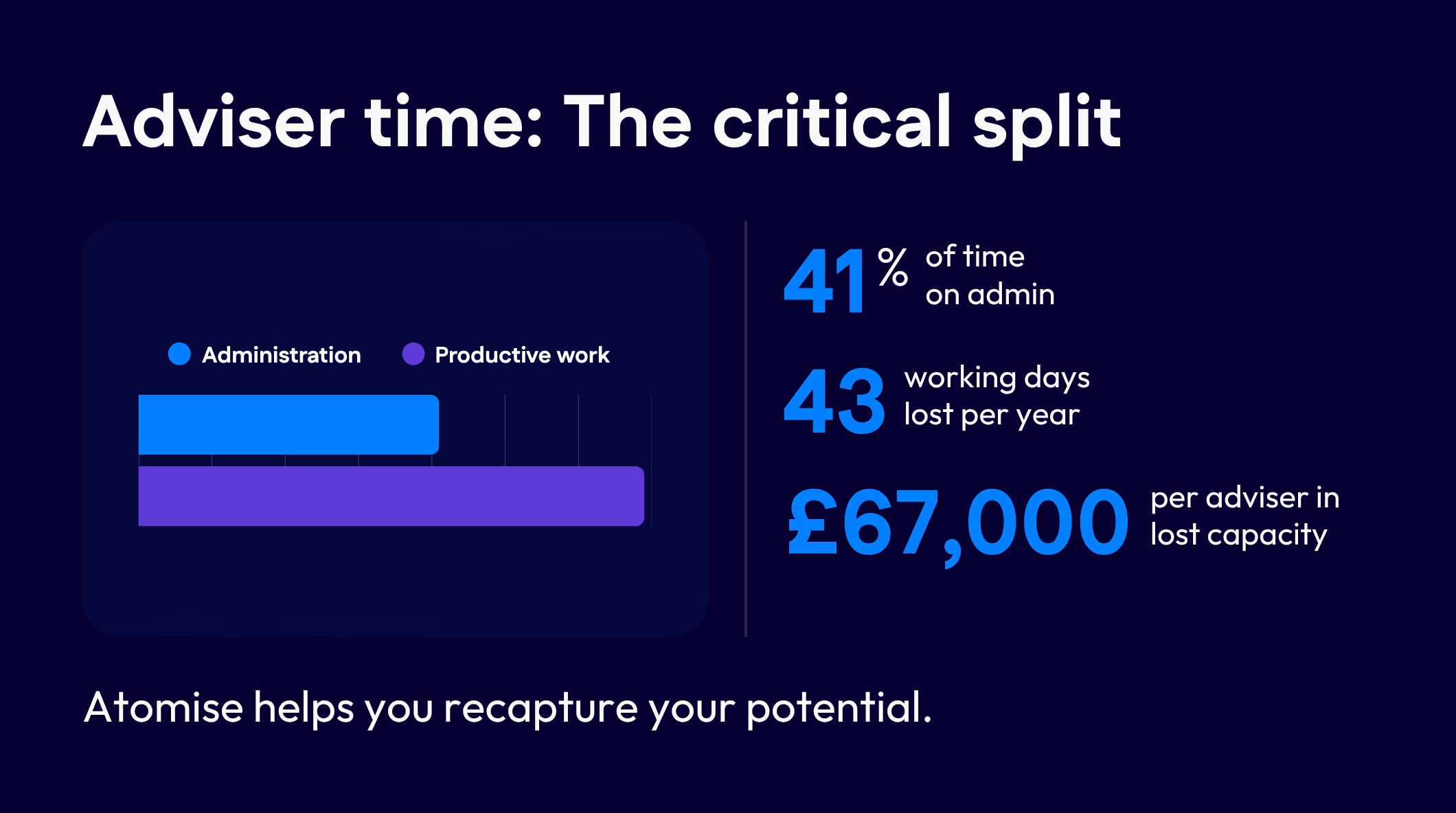
For a firm with ten advisers, that figure approaches £670,000 annually in time that generates no revenue but cannot be eliminated under current workflows.
Now consider what happens when those same firms add a higher-volume, lower-margin service line that still requires compliance evidence for every consumer interaction. Without fundamental changes to how work flows through the business, the admin burden scales proportionally. More consumers served means more evidence gathered, more handoffs between teams, and more hours lost to processes that were never designed for this kind of throughput.
Where the time actually goes
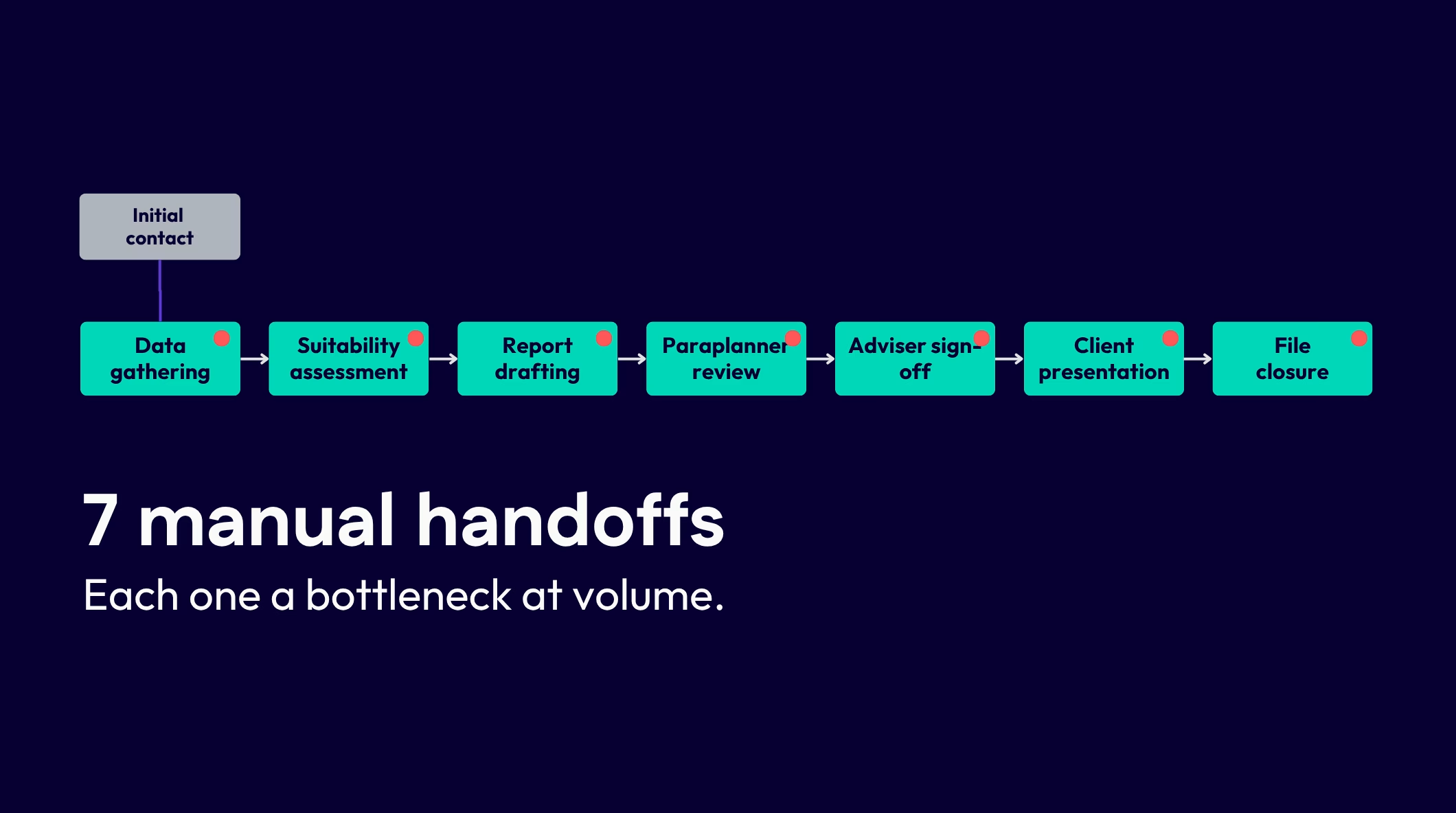
Where the time actually goes is into manual administrative overhead, cross-team coordination, regulatory compliance checks, and troubleshooting legacy system friction. While targeted support opportunities appear efficient on the surface, these hidden operational tasks consume hours of team capacity that could otherwise drive core growth.
What operationally ready looks like
The firms best positioned to capitalise on targeted support share a common trait: they treat operational efficiency as a prerequisite for growth, not a consequence of it.
In practice, that means doing the unglamorous work before submitting the application. Mapping current processes. Measuring where time actually goes — with data, not assumptions. Identifying which handoffs create bottlenecks, which steps are duplicated across teams, and which parts of the workflow exist purely out of institutional habit.
Then automating the pieces that should never have been manual.
This is not about replacing advisers with technology. It is about removing the friction that prevents advisers from doing what they are trained and paid to do — advise. When a firm reduces its per-client onboarding time from four hours to one, it does not need to hire four times the staff to serve four times the consumers. It needs the same team, working on infrastructure that was designed for scale.
Five steps before April 6th
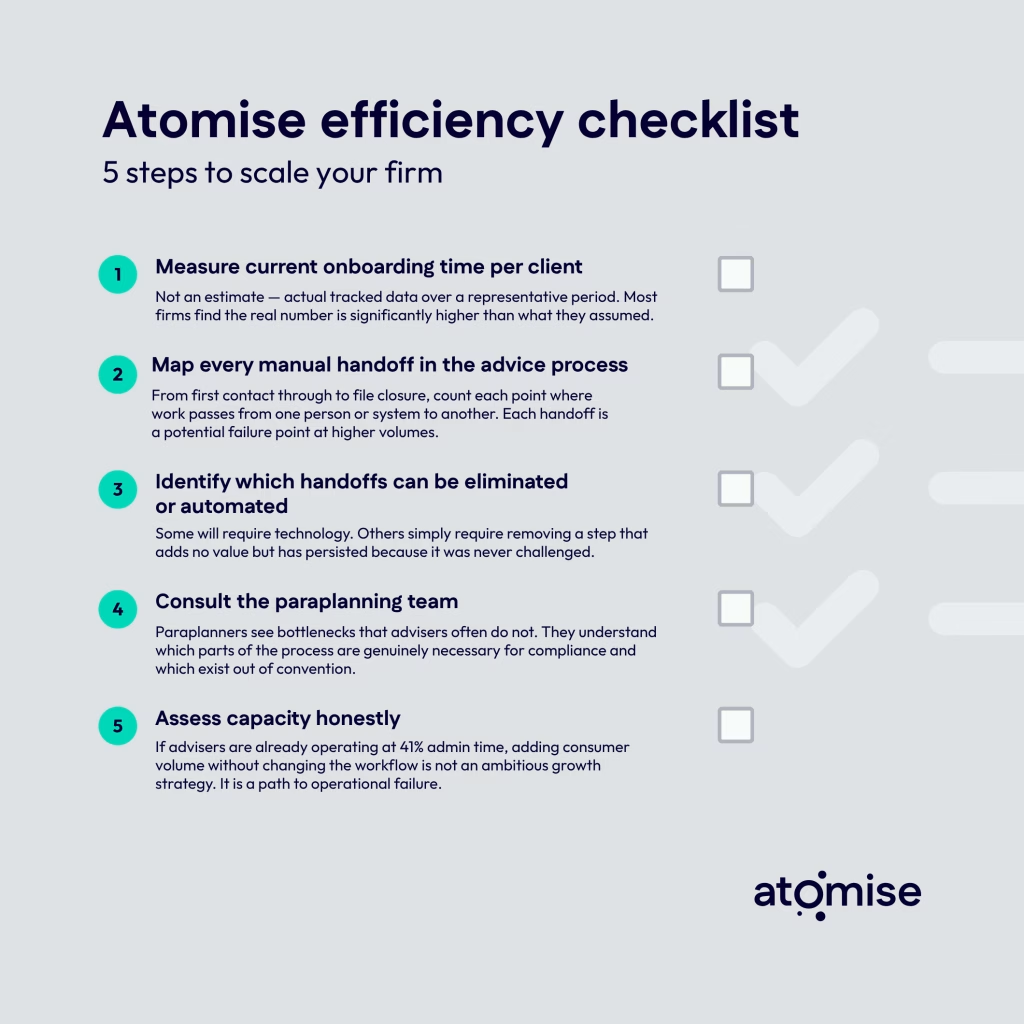
For firms considering targeted support, there are practical steps worth taking in the weeks before the regime goes live.
Print and complete the checklist we’ve created for you here:
Measure current onboarding time per client. Not an estimate —
actual tracked data over a representative period. Most firms find the real number is significantly higher than what they assumed.
Map every manual handoff in the advice process. From first contact through to file closure, count each point where work passes from one person or system to another. Each handoff is a potential failure point at higher volumes.
Identify which handoffs can be eliminated or automated. Some will require technology. Others simply require removing a step that adds no value but has persisted because it was never challenged.
Consult the paraplanning team. Paraplanners see bottlenecks that advisers often do not. They understand which parts of the process are genuinely necessary for compliance and which exist out of convention.
Assess capacity honestly. If advisers are already operating at 41% admin time, adding consumer volume without changing the workflow is not an ambitious growth strategy. It is a path to operational failure.
The opportunity is real. So is the risk.
None of this is an argument against targeted support. The regime represents a genuine, structural shift in how financial advice can reach the consumers who need it most. The firms that move decisively and serve underserved consumers well will build something commercially and socially valuable.
But moving quickly on a fragile operational foundation does not create speed. It creates fragility at scale.
The two weeks before April 6th are not just about permissions and applications. They are about asking an honest question: is the operational infrastructure ready for what comes next?
The firms that answer that question honestly — and act on the answer — will be the ones still scaling 18 months from now. The rest will be drowning in the same admin that held them back before the opportunity arrived.