
At Atomise, we’re constantly exploring how to embed exceptional design thinking into every facet of our business. Recently, we undertook a deep dive into customer-centric design, drawing insights from industry leaders. With focus on practical applications that drive better outcomes for everyone.
At the intersection of behavioural design, and strategic UX lies a simple truth: great design isn’t just functional—it’s transformative. I attended a Leeds Digital Festival event on the subject of ‘Designing wealth for everyone: How UX and Regulation are shaping finance’.
Here’s a summary of our key takeaways:
1. Beyond frictionless: Designing for support and inclusion
Highlighted was a crucial shift: simply “taking the friction away” isn’t always enough. Instead, the focus should be on providing “aided” experiences. This means proactively offering targeted support, guidance, and advice—especially for vulnerable customers. They need help when navigating significant life changes. By emphasising inclusion, access, and future impact, we ensure our design choices serve a broader, more diverse audience. Lee Summerfield Head of UX, AJ Bell and Jay Clark Senior Design Manager, Monzo Bank both explained. They described how their organisations are providing extensive support, advice and signposting to their customers through https://monzo.com/supporting-all-our-customers and AJ Bell’s Learn Hub.
We’ve learned that fostering trust and positive engagement means operating with an empathetic approach is vital when dealing with sensitive topics or complex financial decisions.

Image credit: AJ Bell
2. The power of behavioural design and emotional connection
Inspired by insights from behavioural design and the practices of innovators like Monzo, we recognise the immense potential of behavioural design. Techniques like “roundups,” automated savings, and “invest your interest” schemes subtly encourage positive financial habits.
Furthermore, we understand the power of emotional prompting, especially when it comes to fostering long-term commitments like investing. In these cases, it’s not merely about addressing a customer’s “here and now”; rather, it’s about forging a deeper connection with their aspirations for the future. As a result, we intentionally frame the investor journey as a 5-year-plus endeavour. By doing so, we help customers not only visualise their long-term goals but also feel genuinely optimistic about achieving them.
In addition to this future-focused framing, we also employ techniques such as gamification, celebrating milestones, and leveraging positive emotions. Together, these strategies serve as powerful tools that drive better customer outcomes. Ultimately, by combining emotional resonance with structured engagement, we create experiences that are both motivating and meaningful.

Image credit: Monzo
3. Clear language and building trust
Effective language is foundational. AJ Bell explored how to reframe risks through clear language, an appropriate tone of voice, and consistent messaging. Understanding customer personas and conducting subconscious research (like AJ Bell’s “feel-good investing”) helps them tailor their approach.
A core principle is designing to build trust. This requires clarity and simplicity across all touchpoints, from initial onboarding to ongoing interactions. We’re continually assessing our “reading age” for communications. For example, Virgin Money deliberately target a reading age of 10, particularly because the average UK reading age standing at 11yrs. This helps ensure our messages are accessible and understandable to the widest possible audience.
Dan Edwards Head of Human-Centred Design (HCD), Virgin Money discussed how his team are focused on ease, empowerment and joy with their HCD principles.
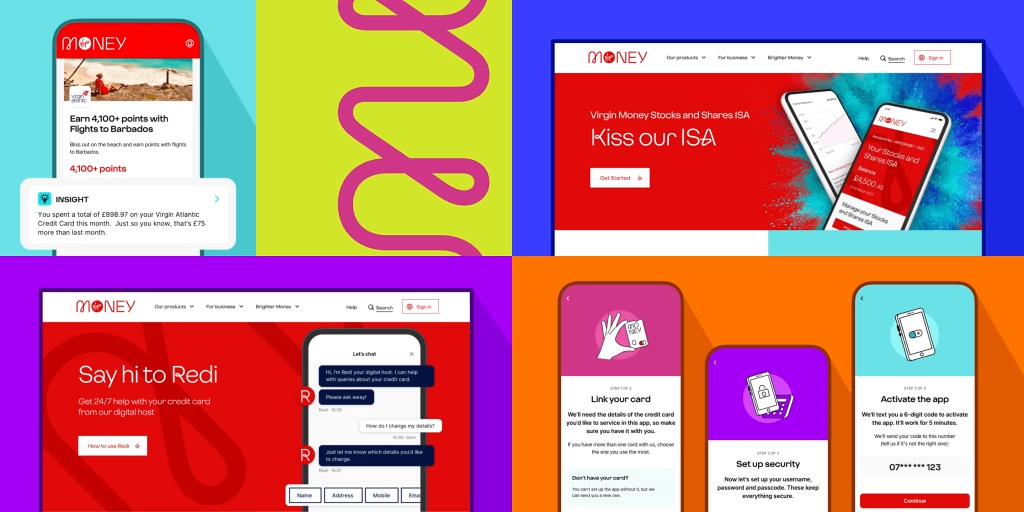
Image credit: Virgin Money
4. Focusing on underserved investors
A significant focus for Monzo is on designing for first-time and underserved investors. Recognising the unique barriers this group faces: financial constraints, confusion, and a general sense of concern or being risk-averse. 80% identify as such. Monzo’s goal is to break these barriers through intuitive design, clear guidance, and accessible information. This ultimately empowers more people to take control of their financial futures.
5. Continuous improvement and feedback
A commitment to great design is an ongoing journey. Bringing the right people into the conversations early with “Bluesky thinking” helps identify key areas. These include underserved markets, a potential £500 million opportunity, and challenges like “too much choice” or “not enough time” for customers.
To ensure these leading organisations are always improving, they are actively exploring enhanced feedback mechanisms. For instance, a simple feedback button now routes insights to a dedicated channel, after which AI summarises them monthly for the team to act upon. As a result, this continuous feedback loop and iterative process are proving vital for the ongoing evolution of wealth services.
Building on these principles, we aim not only to meet but also to exceed customer expectations. Consequently, we strive to create experiences that are intuitive, inclusive, and genuinely supportive. Moreover, we’re excited about the future of design at Atomise and the positive impact it will have on our customers. To stay ahead, we consistently keep up with industry best practices and draw inspiration from innovators such as AJ Bell, Monzo, and Virgin Money.
For more insights into optimising design or user experience within your business, feel free to connect with us.


